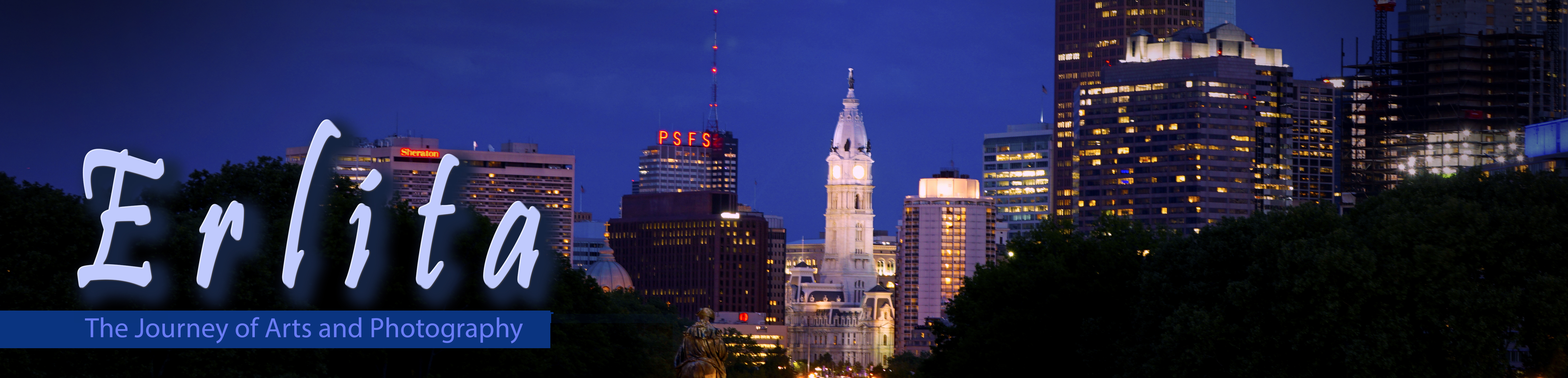


City hall of Phialdelphia
Built of brick, white marble, and limestone, Philadelphia City Hall is the world’s largest free standing masonry building. In 1976, it was designated a National Historic Landmark, and in 2006, also named a National Historic Civil Engineering Landmark by the American Society of Civil Engineers.
The building was designed by Scottish-born architect John McArthur Jr. and Thomas Ustick Walter in the Second Empire style, and was constructed from 1871 to 1901 at a cost of $24 million. City Hall's tower was completed by 1894, although the interior wasn't finished until 1901. Designed to be the world's tallest building, it was surpassed during construction by the Washington Monument and the Eiffel Tower. Upon completion of its tower in 1894, it became the world's tallest habitable building. It was also the first secular building to have this distinction, as all previous world's tallest buildings were religious structures, including European cathedrals and—for the previous 3,800 years—the Great Pyramid of Giza.
The location chosen was one of the five center city urban park squares dedicated by William Penn, that geometrically is the center to the other four squares within Center City renamed as Penn Square. John McArthur Jr. and Thomas Ustick Walter designed the building in the Second Empire style. City Hall is a masonry building whose weight is borne by granite and brick walls up to 22 ft (6.7 m) thick. The principal exterior materials are limestone, granite, and marble. The original design called for virtually no sculpture. The stonemason William Struthers and sculptor Alexander Milne Calder were responsible for the more than 250 sculptures of nature, capturing artists, educators, and engineers who embodied American ideals and contributed to this country’s genius.The final construction cost was $24 million.
At 548 ft (167 m), including the statue of city founder William Penn atop its tower, City Hall was the tallest habitable building in the world from 1894 to 1908. It remained the tallest in Pennsylvania until it was surpassed in 1932 by the Gulf Tower in Pittsburgh. It was the tallest in Philadelphia until 1986 when the construction of One Liberty Place surpassed it, ending the informal gentlemen's agreement that had limited the height of buildings in the city to no higher than the Penn statue.
It was constructed over the time span from 1871 to 1901 and includes 700 rooms dedicated for uses of various governmental operations. The building structure used over 88 million bricks and thousands of tons of marble and granite. With almost 700 rooms, City Hall is the largest municipal building in the United States and one of the largest in the world. The building houses three branches of government: the city's executive branch (the Mayor's Office), its legislature (the Philadelphia City Council), and a substantial portion of the judicial activity in the city (the Civil Division and Orphan's Court of the Pennsylvania Court of Common Pleas for the First Judicial District are housed there, as well as chambers for some criminal judges and some judges of the Philadelphia Municipal Court).
The tower features a clock face on each side that is 26 ft (7.9 m) in diameter. The clock faces are larger in diameter than those on Big Ben which measure 23 ft (7 m). City Hall's clock was designed by Warren Johnson and built in 1898.
City Hall's observation deck is located directly below the base of the statue, about 500 ft (150 m) above street level. Once enclosed with chain-link fencing, the observation deck is now enclosed by glass. It is reached in a 6-person elevator whose glass panels allow visitors to see the interior of the iron superstructure that caps the tower and supports the statuary and clocks. Stairs within the tower are only used for emergency exit. The ornamentation of the tower has been simplified; the huge garlands that festooned the top panels of the tower were removed.
In the 1950s, the city council investigated tearing down City Hall for a new building elsewhere. They found that the demolition would have bankrupted the city due to the building's masonry construction.