

"%3ECruiser Olympia ( white)%3C/a%3E%3C/strong%3E%3C/p%3E%3Cp%3E%0ALength%3A+344+feet%0A%0A+Beam%3A+53+feet%0A%0ADisplacement%3A+5%2C870+tons%0A++++%0ACrew%3A+33+Officers%2C+396+enlisted+men%5C%0A%0ATop+Speed%3A+22+knots+%2825mph%29%0A++++%0ACoal+Consumption+at+Top+Speed%3A+633+lbs.%2Fminute%0A%0A%0A%0AHistory+and+Significance%0A%0ALaunched+in+1892%2C+Cruiser+Olympia+%28C-6%29+is+the+oldest+steel+warship+afloat+in+the+world+and+is+one+of+only+two+ships+left+from+World+War+I+%28the+other+being+Battleship+Texas%29.%0A%0AThe+ship+was+placed+into+commission+by+the+United+States+Navy+for+the+first+time+in+February+1895+as+a+state-of-the-art+man+of+war.+In+the+years+since%2C+she+continues+to+serve+her+country+as+a+monument+to+American+genius+and+ingenuity+but+also+as+a+public+memorial+to+those+who+gave+their+lives+in+service+to+their+country.%0A%0ACruiser+Olympia+rose+to+fame+as+Commodore+%28later+Admiral%29+George+Dewey%E2%80%99s+flagship+during+the+Battle+of+Manila+Bay+on+May+1%2C+1898.+This+battle+not+only+marked+the+beginning+of+the+Spanish-American+War%2C+but+also+positioned+America%E2%80%99s+Navy+as+a+world+power.+Fittingly%2C+her+final+act+of+service+was+the+transportation+of+the+American+Unknown+Soldier+of+World+War+I+from+France+to+the+United+States+in+1921.+The+soldier+now+lies+entombed+at+Arlington+National+Cemetery.+As+Olympia+was+the+most+famous+vessel+of+the+time+period%2C+the+selection+served+as+a+way+to+commemorate+both+the+ship%E2%80%99s+and+soldier%E2%80%99s+service.%0A%0AIn+between+her+first+and+last+missions%2C+she+served+as+part+of+the+Northern+Expedition+and+brought+the+first+armed+Americans+ever+to+land+on+Russian+soil.+Additionally%2C+she+provided+humanitarian+aid+in+the+Adriatic+and+was+charged+with+dispensing+food%2C+aid%2C+and+medicine+to+communities+affected+by+the+flu+epidemic+that+broke+out+in+Europe+at+the+end+of+World+War+I.%0A%0AOver+Olympia%E2%80%99s+27-year+service+life%2C+which+saw+two+wars+and+the+administration+of+six+presidents%2C+thousands+of+Americans+served+aboard+as+commissioned+officers+and+enlisted+sailors.+Like+other+vessels+of+the+U.S.+Navy%2C+she+was+a+microcosm+of+the+American+population.+Her+racially+diverse+crew+largely+represented+the+many+ethnic+and+cultural+differences+from+Europe%2C+East+Asia%2C+and+Africa.+These+differences+brought+a+unique+and+personal+richness+to+Olympia%E2%80%99s+illustrious+and+storied+career.%0ATechnology%0A%0AOlympia%E2%80%99s+design+comes+out+of+a+period+known+as+the+New+Steel+Navy%2C+an+era+in+American+ship+design+from+the+late+1880s+through+the+early+1900s.+She+was+one+of+the+first+ships+to+be+equipped+with+refrigeration+and+radio+communication+systems%2C+and+one+of+the+first+to+use+steam+for+a+multitude+of+tasks.+Of+note%2C+a+Fessenden+oscillator%2C+an+early+sonar+system%2C+was+installed+in+1917.+The+oscillator+aboard+Olympia+is+the+only+example+of+this+type+of+sonar+known+to+still+exist.+%0A%0A%28www.phillyseaport.org%29%3C/p%3E)
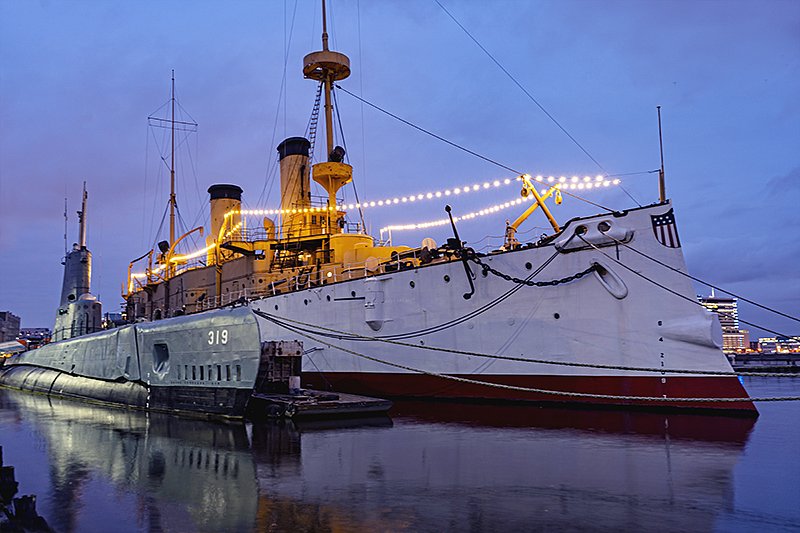
Cruiser Olympia ( white)
Length: 344 feet
Beam: 53 feet
Displacement: 5,870 tons
Crew: 33 Officers, 396 enlisted men\
Top Speed: 22 knots (25mph)
Coal Consumption at Top Speed: 633 lbs./minute
History and Significance
Launched in 1892, Cruiser Olympia (C-6) is the oldest steel warship afloat in the world and is one of only two ships left from World War I (the other being Battleship Texas).
The ship was placed into commission by the United States Navy for the first time in February 1895 as a state-of-the-art man of war. In the years since, she continues to serve her country as a monument to American genius and ingenuity but also as a public memorial to those who gave their lives in service to their country.
Cruiser Olympia rose to fame as Commodore (later Admiral) George Dewey’s flagship during the Battle of Manila Bay on May 1, 1898. This battle not only marked the beginning of the Spanish-American War, but also positioned America’s Navy as a world power. Fittingly, her final act of service was the transportation of the American Unknown Soldier of World War I from France to the United States in 1921. The soldier now lies entombed at Arlington National Cemetery. As Olympia was the most famous vessel of the time period, the selection served as a way to commemorate both the ship’s and soldier’s service.
In between her first and last missions, she served as part of the Northern Expedition and brought the first armed Americans ever to land on Russian soil. Additionally, she provided humanitarian aid in the Adriatic and was charged with dispensing food, aid, and medicine to communities affected by the flu epidemic that broke out in Europe at the end of World War I.
Over Olympia’s 27-year service life, which saw two wars and the administration of six presidents, thousands of Americans served aboard as commissioned officers and enlisted sailors. Like other vessels of the U.S. Navy, she was a microcosm of the American population. Her racially diverse crew largely represented the many ethnic and cultural differences from Europe, East Asia, and Africa. These differences brought a unique and personal richness to Olympia’s illustrious and storied career. Technology
Olympia’s design comes out of a period known as the New Steel Navy, an era in American ship design from the late 1880s through the early 1900s. She was one of the first ships to be equipped with refrigeration and radio communication systems, and one of the first to use steam for a multitude of tasks. Of note, a Fessenden oscillator, an early sonar system, was installed in 1917. The oscillator aboard Olympia is the only example of this type of sonar known to still exist.