
Hidden gem
Sometimes you have to dig through the dirt to find gems
Sometimes you have to dig through the dirt to find gems
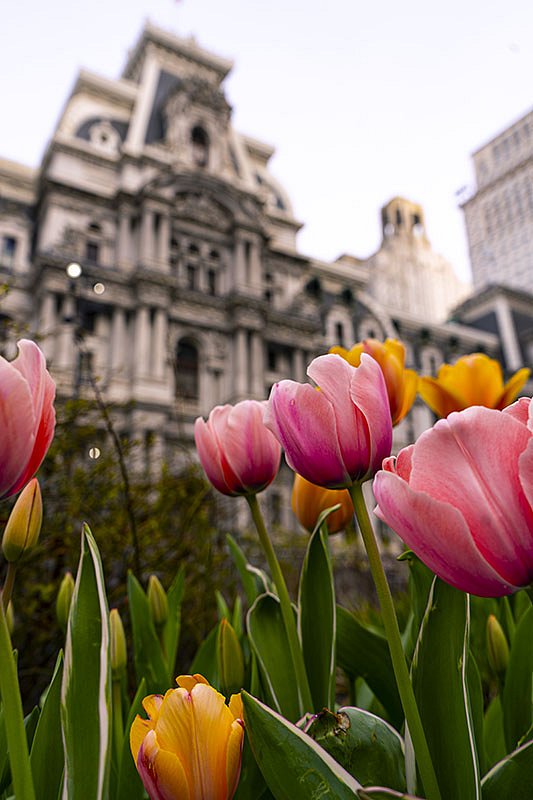
Spring has sprung
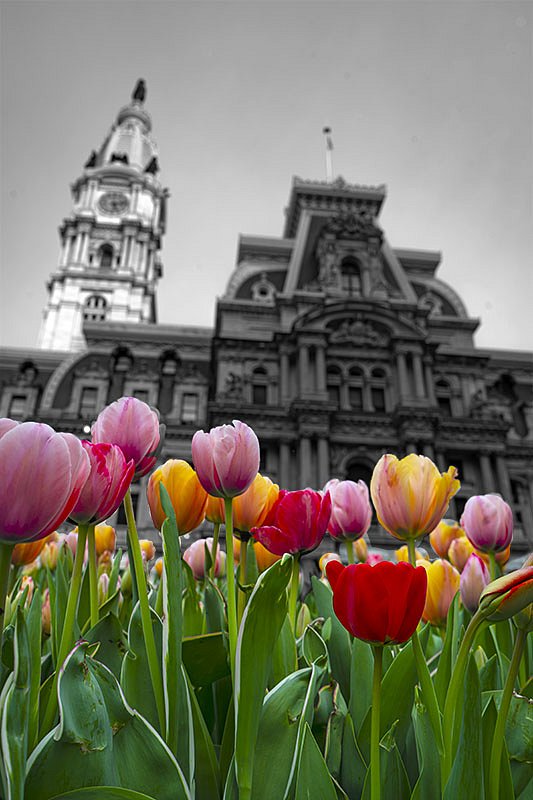
Tulip season is here...
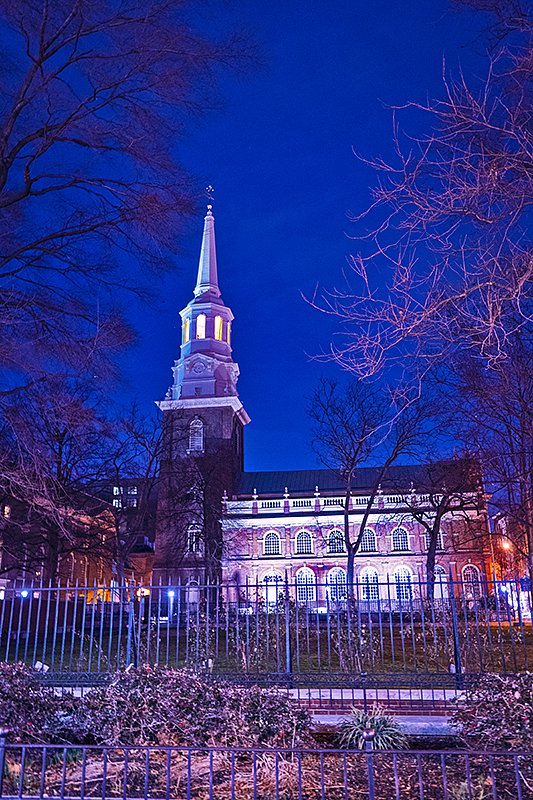
Christ Church is an Episcopal church in the Old City neighborhood of Philadelphia. Founded in 1695 as a parish of the Church of England, it played an integral role in the founding of the Protestant Episcopal Church in the United States. In 1785, its rector, William White, became the first Presiding Bishop of the Episcopal Church.
From 1754 to 1810, the church's 196-foot (60 m) tower and steeple was the tallest structure in what is now the United States of America. (wikipedia)

Constructed in 1907 by the estate of philanthropist and banker, Stephen Girard, the Lafayette Building was designed by noted architect, James Windrim and named for the Marquis de Lafayette. The rehabilitation transformed the vacant office building into a Kimpton Hotel Monaco. Located across from Independence Hall, the rooms overlook the adjacent mall and the rooftop bar and lounge incorporate original rooftop pavilions and provide a unique outdoor experience.
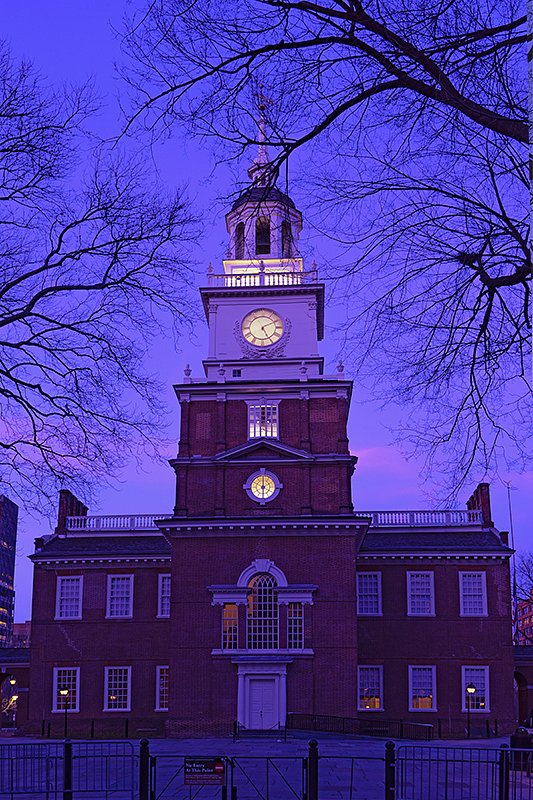
Independence Hall touts a red brick facade, designed in Georgian style. It consists of a central building with belltower and steeple, attached to two smaller wings via arcaded hyphens. The highest point to the tip of the steeple spire is 168 feet 7 1⁄4 inches (51.391 m) above the ground.
The State House was built between 1732 and 1753, designed by Edmund Woolley and Andrew Hamilton, and built by Woolley. Its construction was commissioned by the Pennsylvania colonial legislature which paid for construction as funds were available, so it was finished piecemeal. It was initially inhabited by the colonial government of Pennsylvania as its State House, from 1732 to 1799.
In 1752, when Isaac Norris was selecting a man to build the first clock for the State House, today known as Independence Hall, he chose Thomas Stretch, the son of Peter Stretch his old friend and fellow council member, to do the job. In 1753 Stretch erected a giant clock at the building's west end that resembled a tall clock (grandfather clock). The 40-foot-tall (12 m) limestone base was capped with a 14-foot (4.3 m) wooden case surrounding the clock's face, which was carved by Samuel Harding. The giant clock was removed about 1830. The clock's dials were mounted at the east and west ends of the main building connected by rods to the clock movement in the middle of the building. A new clock was designed and installed by Isaiah Lukens in 1828. The Lukens clock ran consecutively for eight days, "with four copper dials on each side that measured eight feet in diameter and clockworks that ensured sufficient power to strike the four-thousand pound bell made by John Wilbank." The Lukens clock remained in Independence Hall until 1877.
The acquisition of the original clock and bell by the Pennsylvania Colonial Assembly is closely related to the acquisition of the Liberty Bell. By mid-1753, the clock had been installed in the State House attic, but six years were to elapse before Thomas Stretch received any pay for it. (wwikipedia)
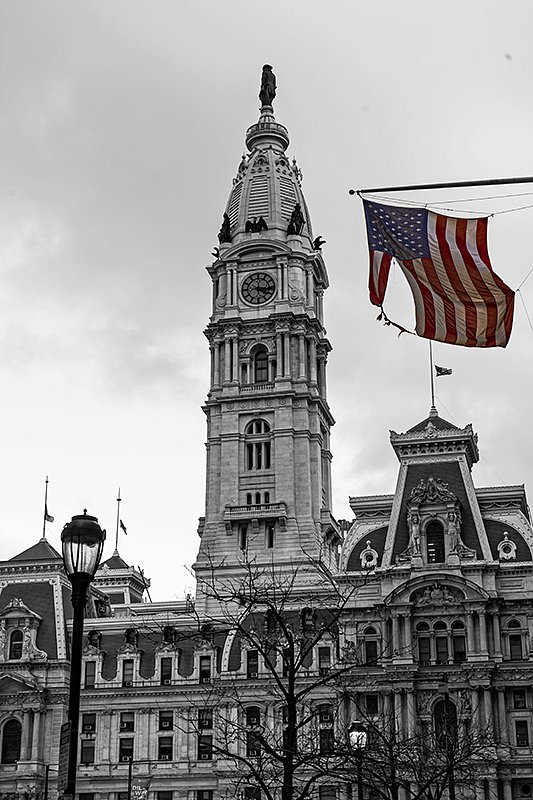
Without knowing that mass stormed the Capitol that afternoon, I took this pictures, wondering what people do really think of this torn and broken flag every time they saw it.
What an awful coincidence.,...
It really hurts so much and left a deep scar in every heart. Not only that eyes are crying, but heart is also bleeding......
America, like this flag, we are torn and broken now as a nation.
Remember... "United we stand, divided we fall"
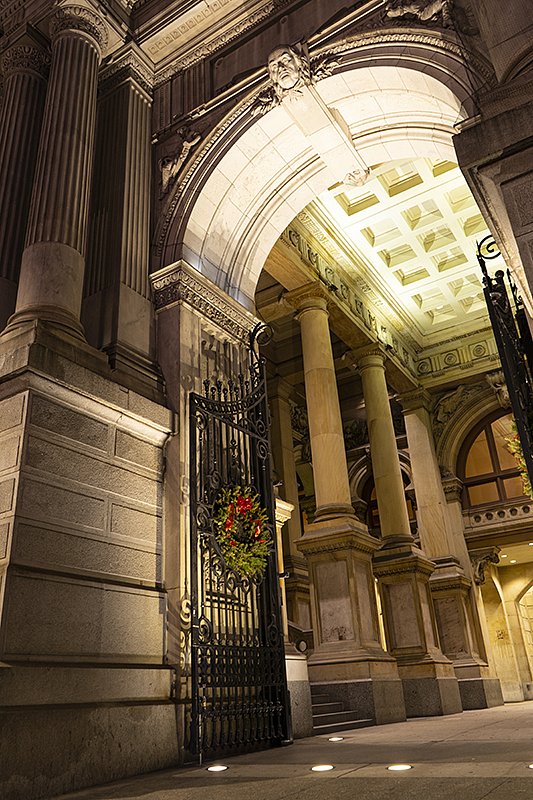
The plans for these gates were actually approved all the way back in 2001, when City Hall’s exterior was in the midst of a huge renovation. The gate’s design was drawn up by the architecture firm Vitetta, but they’re based on sketches made by John McArthur Jr., the original architect of City Hall
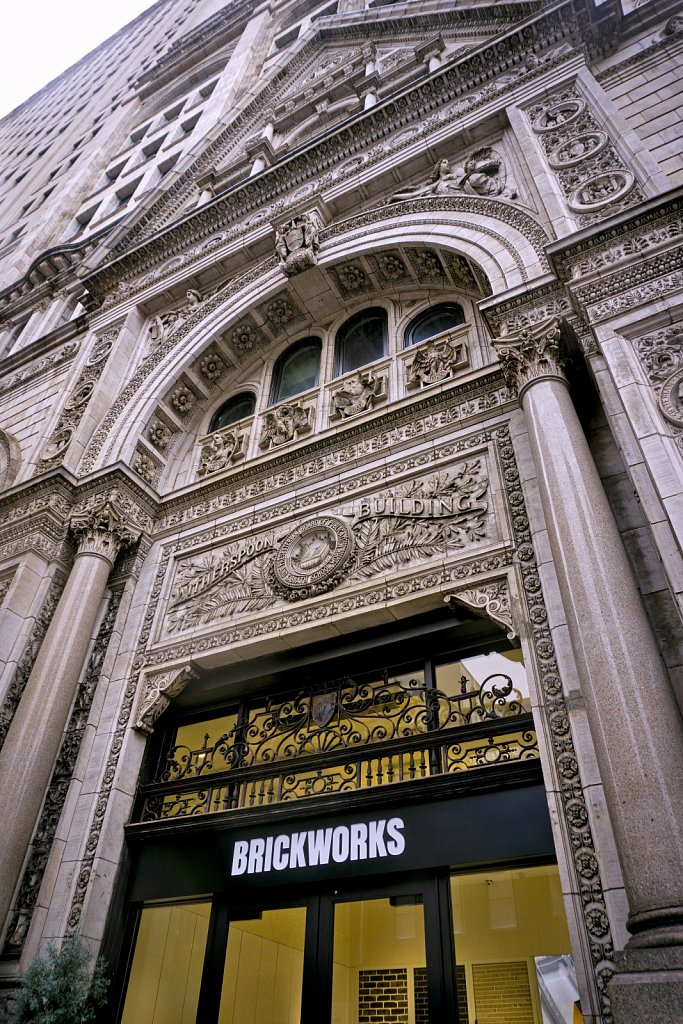
Witherspoon Building is a historic office building located in the Market East neighborhood of Philadelphia, Pennsylvania. It was designed by architect Joseph M. Huston (1866–1940) and built between 1895 and 1897. It was built for the Presbyterian Board of Publications and Sabbath School Work. It is an 11-story, steel frame "E"-shaped building, faced with brick and granite. It has terra cotta decorative elements. Its exterior features Corinthian order and Ionic order columns, statues, medallions, seals of various boards and agencies of the Presbyterian Church and of related Reformed churches. It is named for John Witherspoon (1723–1794), a president of Princeton University.
It was added to the National Register of Historic Places in 1978. (wikipedia)
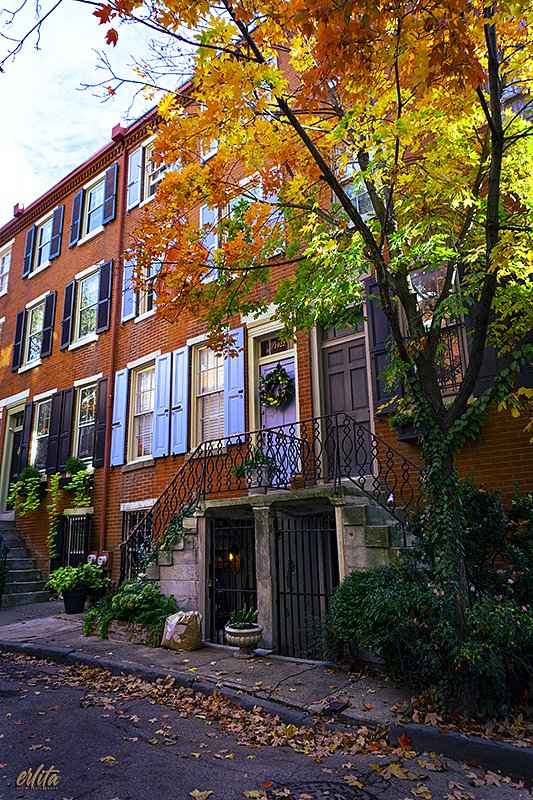
Ringgold Place House or known as the 1900 block of Waverly Street is comprised of 16 rowhomes, each 14 feet wide by 20 feet deep, with the 9-step front stoops accommodating a raised basement kitchen at street level. Waverly is barely the width of a sedan, with no street parking. When these properties were built in 1862, the street was called Ringgold Place, after Colonel Samuel Ringgold. Stone inlays bearing that name can still be seen on the corner properties(reading, “The Ringgold Place Houses (Built 1862) have been registered on the National Register of Historic Places.”). Construction during the Civil War era necessitated the small size and simple design of the houses, due to the scarcity of materials in wartime.
The small size was also due to their original use as workers’ housing, likely for the Berkshire Cotton Mill located on the next block at 20th Street and Ringgold Place. While 1,000 square feet may seem petite for one family, it is possible that multiple families may have occupied each rowhouse on Ringgold Place! The multiple door (basement and first floor) entries lend themselves to subdivision, and the tendency at the time was to squeeze workers into small quarters and to make the most out of existing housing stock. By 1895 the Berkshire Mills was closed, and the homes promptly transformed into more fashionable abodes, largely encouraged by the growing influence of Rittenhouse Square.
In 1925, architect George Howe purchased the block, and proceeded to update the properties, clean the facades, and added some decorative elements. The corner property of 1900 Waverly served as his office while working on his acclaimed PSFS building. He sold the homes in 1934.
Ringgold Place formally changed to Waverly Street sometime between 1895-1942, and the block was added National Register of Historic Places in 1983. (solorealty)
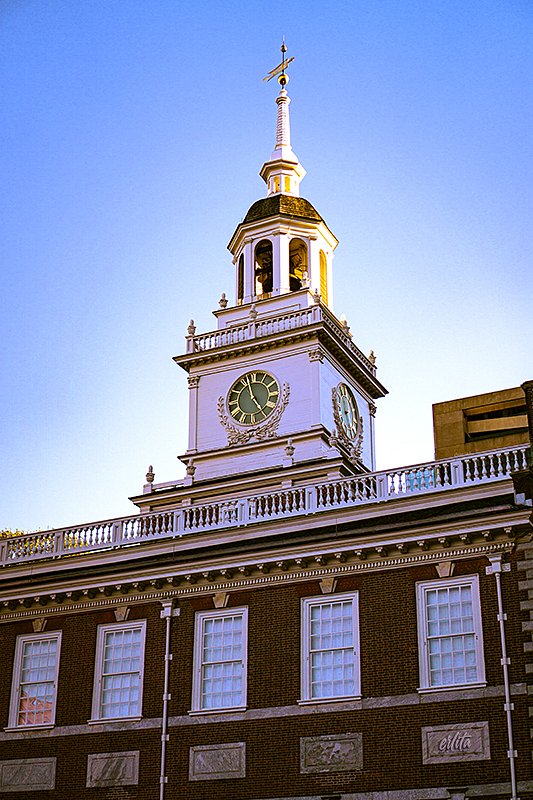
In 1752, when Isaac Norris was selecting a man to build the first clock for the State House, today known as Independence Hall, he chose Thomas Stretch, the son of Peter Stretch his old friend and fellow council member, to do the job.
In 1753 Stretch erected a giant clock at the building's west end that resembled a tall clock (grandfather clock). The 40-foot-tall (12 m) limestone base was capped with a 14-foot (4.3 m) wooden case surrounding the clock's face, which was carved by Samuel Harding. The giant clock was removed about 1830. The clock's dials were mounted at the east and west ends of the main building connected by rods to the clock movement in the middle of the building. A new clock was designed and installed by Isaiah Lukens in 1828. The Lukens clock ran consecutively for eight days, "with four copper dials on each side that measured eight feet in diameter and clockworks that ensured sufficient power to strike the four-thousand pound bell made by John Wilbank." The Lukens clock remained in Independence Hall until 1877.
By mid-1753, the clock had been installed in the State House attic, but six years were to elapse before Thomas Stretch received any pay for it.

The Liberty Bell, previously called the State House Bell or Old State House Bell, is an iconic symbol of American independence, located in Philadelphia, Pennsylvania. Once placed in the steeple of the Pennsylvania State House (now renamed Independence Hall), the bell today is located in the Liberty Bell Center in Independence National Historical Park. The bell was commissioned in 1752 by the Pennsylvania Provincial Assembly from the London firm of Lester and Pack (known subsequently as the Whitechapel Bell Foundry), and was cast with the lettering "Proclaim LIBERTY Throughout all the Land unto all the Inhabitants Thereof", a Biblical reference from the Book of Leviticus (25:10). The bell first cracked when rung after its arrival in Philadelphia, and was twice recast by local workmen John Pass and John Stow, whose last names appear on the bell. In its early years, the bell was used to summon lawmakers to legislative sessions and to alert citizens about public meetings and proclamations. (Wikipedia)
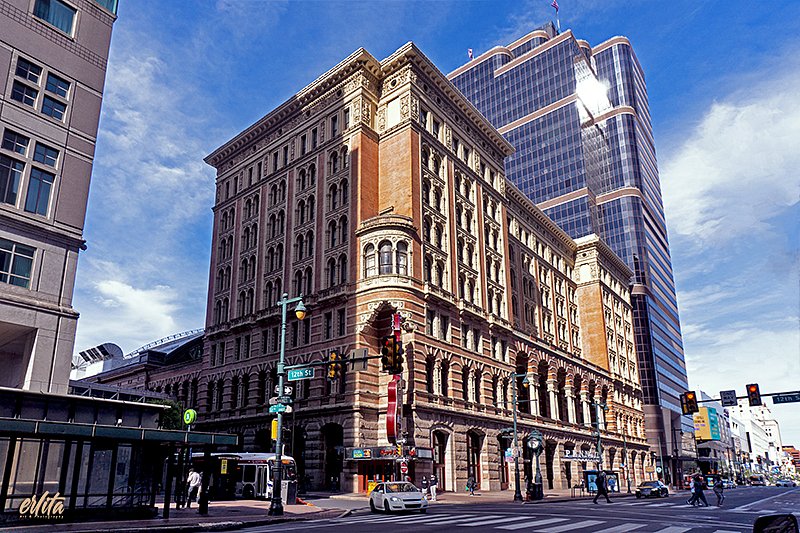
In 1889, the Philadelphia and Reading Railway decided to build a train depot, passenger station, and company headquarters on the corner of 12th and Market Streets. The move came eight years after the Pennsylvania Railroad opened its Broad Street Station several blocks away at 15th and Market Streets, and one year after the Baltimore and Ohio Railroad opened its 24th Street Station at 24th and Chestnut Streets.
ARCHITECTURE:
The headhouse was designed in 1891 by Francis H. Kimball, and the train shed by Wilson Brothers & Company. Construction began that same year, and the station opened on January 29, 1893. At the time, the trainshed was one of the largest single-span arched-roof structures in the world. The following year, the Wilson Brothers would build an even larger trainshed three blocks away, for the Pennsylvania Railroad's Broad Street Station. The Reading's trainshed is now the only such structure left in the United States.
The complex was fronted on Market by an eight-story headhouse that housed the passenger station and company headquarters. Built in the Italian Renaissance style, the headhouse has brick bearing walls with cast-iron columns and timber floors. Interior finishes include molded ornamental plaster and marble with cast-iron detailing.
This station was placed on the National Register of Historic Places in 1972 and was declared a National Historic Landmark in 1976.
Now the remaining space on the concourse levels of the headhouse became retail space. The former Reading Railroad offices on the headhouse's upper floors were converted to meeting and ballroom facilities. It also contains more than 200 rooms for the adjacent Marriott Hotel, to which it is connected by a skywalk and for which it serves as a secondary entrance. (wikipedia)

The tallest building on back is Comcast Center Building. In front of it are Suburban Station (left) and Phoenix Luxury Condominium right)
SUBURBAN STATION ===================
Suburban Station is an art deco office building and underground commuter rail station in Penn Center, Philadelphia. Its official SEPTA address is 16th Street and JFK Boulevard. The station is owned and operated by SEPTA and is one of the three core Center City stations on SEPTA Regional Rail. The station was built by the Pennsylvania Railroad to replace the original Broad Street Station and opened on September 28, 1930. The Comcast Center, situated on the north half of its block near Arch Street, adds a "winter garden" on the south side, which serves as a new back entrance to the station, with the commuter rail tracks about 50 feet below street level. .
PHOENIX LUXURY CONDO ===============
Built in 1925, The Phoenix condo is the former headquarters of the Insurance Company of North America (INA), for many years the oldest shareholder-owned insurance company in the nation.
Built in 1925, The Phoenix condo is the former headquarters of the Insurance Company of North America (INA), for many years the oldest shareholder-owned insurance company in the nation.
Awarded National Historic Landmark status, The Phoenix, in its new incarnation, retains opulent details that have graced the structure since its inception—coffered ceilings, Kasota and Carrera marble floors and walls, ornate bronze paneled elevators, and elaborate mill and plaster work. Every care was taken to preserve the historic details of the Georgian Revival Tower while designing and constructing the building with the most modern technologies and amenities available. The coalescence of old-fashioned craftsmanship and contemporary design gives The Phoenix an elegance rarely seen in modern construction. The Phoenix underwent a major renovation in 2002. Every care was taken to preserve the architectural beauty of the Georgian Revival Tower while providing a “new” building with the latest of technologies and energy efficiency
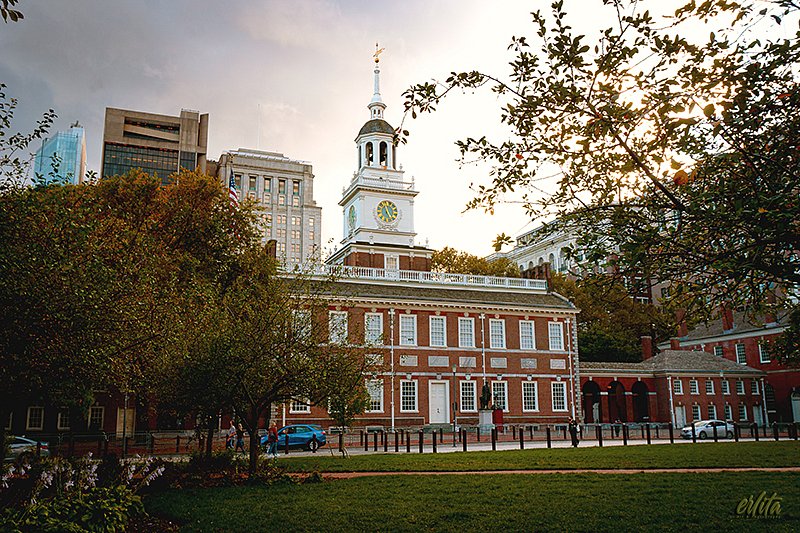
Independence Hall is the building where both the United States Declaration of Independence and the United States Constitution were debated and adopted. It is now the centerpiece of the Independence National Historical Park in Philadelphia, Pennsylvania.
The building was completed in 1753 as the Pennsylvania State House, and served as the capitol for the Province and Commonwealth of Pennsylvania until the state capital moved to Lancaster in 1799. It became the principal meeting place of the Second Continental Congress from 1775 to 1783 and was the site of the Constitutional Convention in the summer of 1787.
A convention held in Independence Hall in 1915, presided over by former US president William Howard Taft, marked the formal announcement of the formation of the League to Enforce Peace, which led to the League of Nations and eventually the United Nations. The building is part of Independence National Historical Park and is listed as a World Heritage Site.

Friday, October 23rd, 2020 - A sea of more than 860 white chairs sat empty on Independence Mall for eight hours. Each one symbolizing 10 people who’ve died from COVID-19 in Pennsylvania this year and will never sit with their loved ones again ( Philadelphia Inquirer)
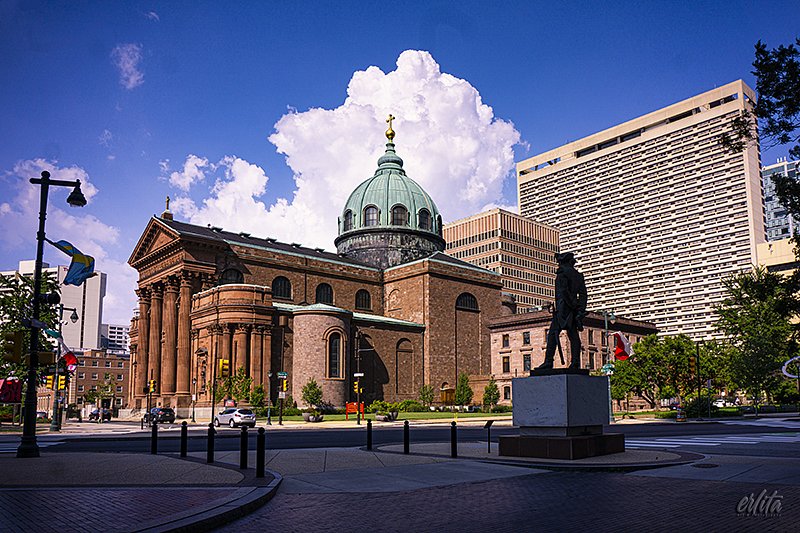
The cathedral church (Cathedral Basilica of Saints Peter and Paul) is the principal church of the diocese, because it is here that the bishop as local ordinary of the diocese has his throne (chair), called the cathedra. Open since 1864 and located at the East side of Logan Square on 18th Street and the Benjamin Franklin Parkway, the cathedral is the mother church of the Archdiocese of Philadelphia. It is the largest brownstone structure in Philadelphia and the largest Catholic Church in Pennsylvania. The history of the Cathedral Basilica of Saints Peter and Paul is central to the history of the Archdiocese of Philadelphia. (catedralphila.org)
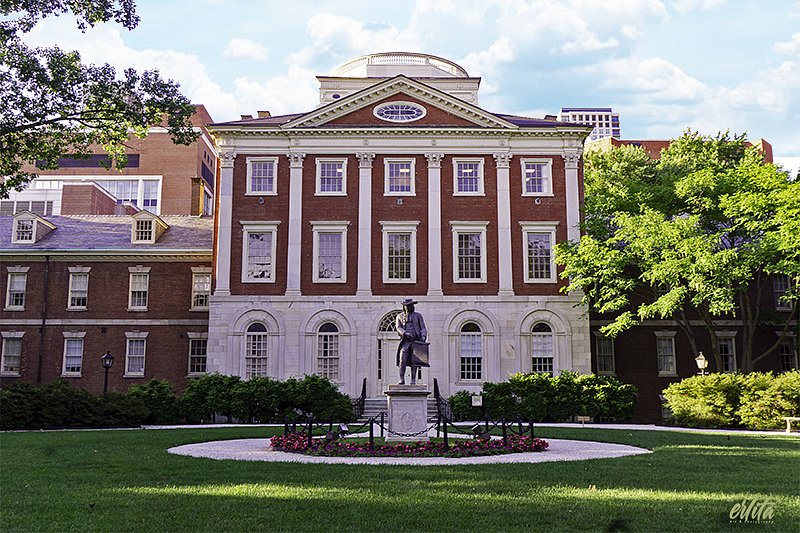
Pennsylvania Hospital is a private, non-profit, 515-bed teaching hospital located in Center City Philadelphia and is part of the University of Pennsylvania Health System. Founded on May 11, 1751, by Benjamin Franklin and Dr. Thomas Bond, Pennsylvania Hospital is one of the earliest established public hospitals in the United States. It is also home to America's first surgical amphitheatre and its first medical library. The hospital's main building, dating to 1756, is a National Historic Landmark.
The seal of the hospital, chosen by Franklin and Bond, incorporates the story of the Good Samaritan; the phrase "Take Care of Him and I will repay Thee" is used on it.
Built : December 17, 1756
Architect : Samuel Rhoads
Architectural style : Colonial and Federal (Pine Building)
(wikipedia)

Library Hall, at 105 South 5th Street is a 1959 reconstruction of the 1790 building originally built for the Library Company of Philadelphia. It is now occupied by the library of the American Philosophical Society.
Founded by Benjamin Franklin in 1743, the Philosophical Society's library contains an unrivaled collection of Franklin's books and papers as well as those of other great scientists from then until now.
Built: 1789
Reconstructed: 1954
Original architect: William Thornton
WHAT'S INSIDE:
The original journals of the Lewis and Clark expedition,
A copy of the Declaration of Independence in Jefferson's own handwriting,
A first edition of Sir Isaac Newton's Principia,
A first edition of Charles Darwin's Origin of Species

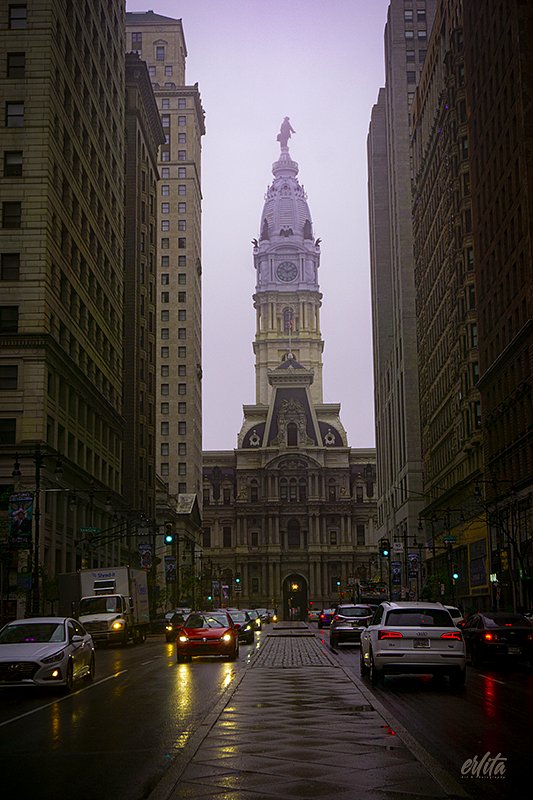
Have we ever been wondering about, why the top of City Hall - a 200-foot metal structure atop a 347-foot stone edifice -“is a completely different shade of white than the rest of the building? Was it an oversight during a renovation project or is there a technical reason?” Actually, the answer to both questions is yes. Renovation required a change in materials used for the City Hall tower’s skin, but the designers of City Hall never meant the fact to be quite so noticeable. The work on the tower, from the clock level up to the observation deck was covered with cast iron, was planned to replace some of the [nearly] 4,000 iron plates, but instead, it replaced almost all of them with a new skin of steel. Most of the 3,900 iron plates were replaced with about 2,000 copper-and-zinc-coated plates. The redesign with fewer plates was intentional; there would be fewer niches and spaces where rainwater could accumulate and cause corrosion. The plates were electroplated and were to be covered with a state-of-the-art paint that would last 50 years or more, the kind of hardy, nearly indestructible paint used for bridges, ships, and airplanes. The thing is, the company that developed the paint made it in just three colors: white, dark gray, and light gray. Officials of the city’s Art Commission chose the light-gray hue and thought about “warming up the color" to match the stone of the main building. But they could not find a way to do it. So the light-gray paint went on the copper plates before being topped on the refurbished tower. It had taken six years (1984 – 1990) and $26.5 million to refurbish Philadelphia’s City Hall tower.
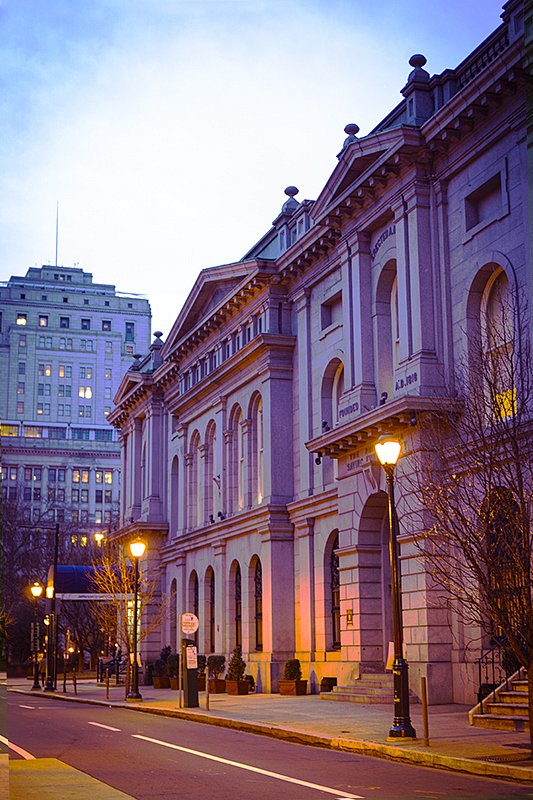


"%3ELibrary Hall Phildelphia ( side view)%3C/a%3E%3C/strong%3E%3C/p%3E%3Cp%3ELibrary+Hall%2C+at+105+South+5th+Street+is+a+1959+reconstruction+of+the+1790+building+originally+built+for+the+Library+Company+of+Philadelphia.+It+is+now+occupied+by+the+library+of+the+American+Philosophical+Society.%0A%0AFounded+by+Benjamin+Franklin+in+1743%2C+the+Philosophical+Society%27s+library+contains+an+unrivaled+collection+of+Franklin%27s+books+and+papers+as+well+as+those+of+other+great+scientists+from+then+until+now.%0A%0A%0ABuilt%3A+1789%0A%0AReconstructed%3A+1954%0A%0AOriginal+architect%3A+William+Thornton%0A%0A%0A%0AWHAT%27S+INSIDE%3A%0A%0A+The+original+journals+of+the+Lewis+and+Clark+expedition%2C%0A%0AA+copy+of+the+Declaration+of+Independence+in+Jefferson%27s+own+handwriting%2C+%0A%0AA+first+edition+of+Sir+Isaac+Newton%27s+Principia%2C+%0A%0AA+first+edition+of+Charles+Darwin%27s+Origin+of+Species%0A%0A%3C/p%3E)

