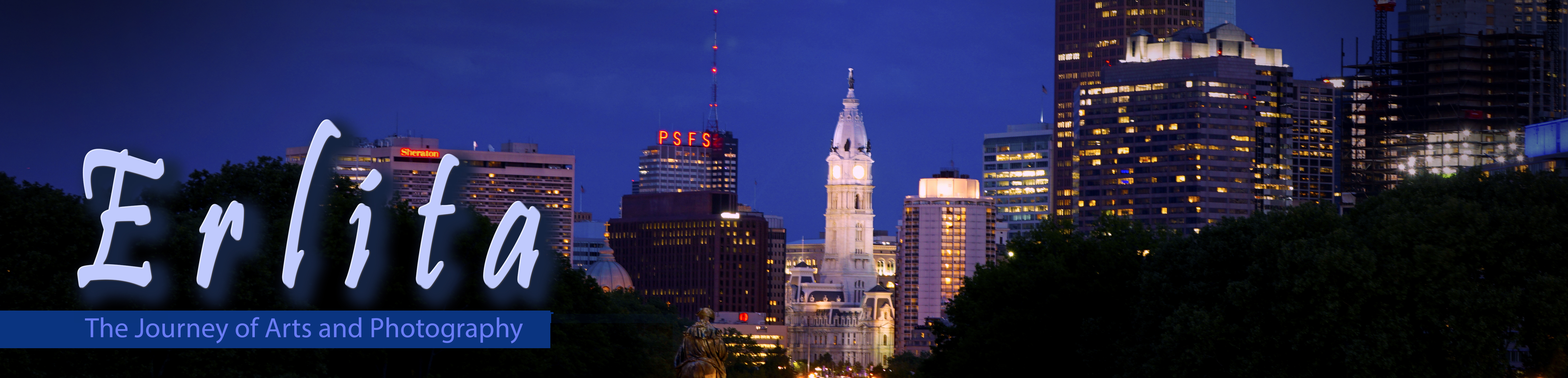
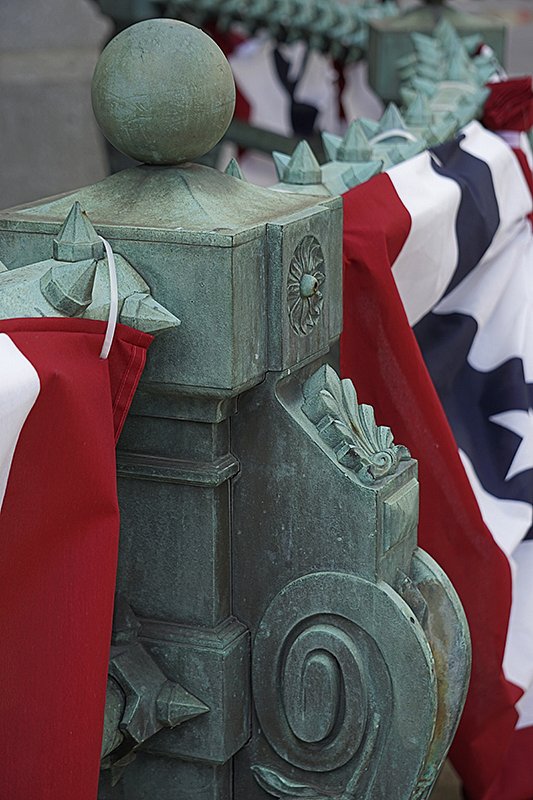


Main gate of Cityhall of Philadelphia
The plans for these gates were actually approved all the way back in 2001, when City Hall’s exterior was in the midst of a huge renovation. The gate’s design was drawn up by the architecture firm Vitetta, but they’re based on sketches made by John McArthur Jr., the original architect of City Hall


Witherspoon Building
Witherspoon Building is a historic office building located in the Market East neighborhood of Philadelphia, Pennsylvania. It was designed by architect Joseph M. Huston (1866–1940) and built between 1895 and 1897. It was built for the Presbyterian Board of Publications and Sabbath School Work. It is an 11-story, steel frame "E"-shaped building, faced with brick and granite. It has terra cotta decorative elements. Its exterior features Corinthian order and Ionic order columns, statues, medallions, seals of various boards and agencies of the Presbyterian Church and of related Reformed churches. It is named for John Witherspoon (1723–1794), a president of Princeton University.
It was added to the National Register of Historic Places in 1978. (wikipedia)


Brick house
A monumental sculpture by acclaimed artist Simone Leigh has been installed at the corner of 34th and Walnut Streets, the gateway to College Green at the University of Pennsylvania.
Titled “Brick House,” the piece depicts a Black woman’s head atop a form that suggests a skirt or perhaps a building. It is the first large-scale piece in the artist’s Anatomy of Architecture series that merges human form with diverse architectural elements. Cast in bronze, the work stands 16 feet high, 9 feet in diameter at its base, and weighs 5,900 pounds. The piece features cowrie shells on the woman’s braids which symbolize wealth, femininity, and the African slave trade in which the shells were used as currency,
The sculpture is a gift from 1987 Penn graduate Glenn Fuhrman, who also earned an MBA degree from The Wharton School the following year, and 1995 Penn graduate Amanda Fuhrman. They advocated for the sculpture's placement on Penn's campus after learning that Leigh hoped to display her artwork on a college campus.


Clothes pin
This steel sculpture was completed in 1976 by Claes Oldenburg. It is designed to appear as a monumental black clothespin. Oldenburg is noted for his attempts to democratize art with large stylized sculptures of everyday objects. Made of Cor-Ten steel, Clothespin is praised by art critics for its velvety texture and weathered, warm reddish-brown color.[3] The silvery steel "spring" part of the two-textured work resembles the numerals "76", apt for the United States Bicentennial year. Tying in Philadelphia's colonial heritage with its difficult present, Clothespin addresses the city's civic issues and tries to bridge gaps across income levels through its universally recognized form. The design has been likened to the "embracing couple" in Constantin Brâncuși's sculpture The Kiss in the Philadelphia Museum of Art.


Architectural sculpturs/objects
Architectural sculptures or objects/elements, either integrated with the structure or freestanding works, they are part of the original design.


The ceiling of Cathedral Basilica of SS Peter and Paulus
– Natural light is admitted through the clerestory windows close to the ceiling. These are of lightly tinted glass and carry simple religious symbols (IHS (Christ), three lilies representing the Trinity, a key (Saint Peter), a cross, a crown of thorns, a sword and scripture (Saint Paul)) as their most prominent decorations. Gold rosettes on a rich blue background adorn the coffered ceiling. Bronze chandeliers, weighing a half ton each, light the nave. (cathedralphila.org)


Philadelphia Hard Rock
Located in the historic Reading terminal train station, Hard Rock Cafe was established on January 15th, 1998
Not much have we known about this cafe in Philadelphia, but we know about one thing.
HRC is known for its collection of rock-and-roll memorabilia. The cafes solicit donations of music memorabilia but also purchase a number of items at auctions around the world, including autographed guitars, costumes from world tours and rare photographs; these are often to be found mounted on cafe walls. The collection began in 1979 with an un-signed Red Fender Lead II guitar from Eric Clapton, who was a regular at the first restaurant in London. Clapton wanted management to hang the guitar over his regular seat in order to lay claim to that spot, and they obliged.
CONCEPT DESIGN
The first thing a memorabilia designer takes into consideration when planning a new location is just that: the location. Then the designer is pulling inspiration from that location/city, from its traditions and its musicians. The next thing is look at the space, the layout of the property and the individual rooms, halls, and spaces within the Cafe or Hotel. Starting with the larger pieces (instruments and clothing) of memorabilia that will be going into the location, the designer will think about the flow and the feel of each piece relative to pieces near it. This relativity could be the similarities in the pieces (two stage costumes, for example) or music styles of the musicians represented or the cities from which the musicians hail. After the “big” pieces are set, designer starts to adding letters, photos, concert posters, and gold records to the mix, to tell the story of that property. Once the placement of every piece is set, it is time for framing. Once there, it can take anywhere from 4-6 weeks for the memorabilia to be framed, then sent back to Hard Rock and readied for their final shipment to the Cafe or Hotel. From there, the designer travels to the property and works with installers to realize his initial design and get everything set. It doesn’t always run smoothly, but everyone rolls with the punches and is always prepared for unexpected circumstances, whether its a TV placed where it wasn’t expected or a large empty space on a wall that wasn’t included in the initial designs. It usually takes anywhere from 9-14 weeks on a single property.
(Hradrock Cafe.com, wikipedia)


FMC Tower
FMC Tower is a 49-story, 730-foot tall, luxury, mixed-use skyscraper designed by Master Architect César Pelli that combines iconic architecture with the latest in advanced engineering and LEED - based sustainable design. The tower contains 622,000 square feet of trophy office space with 10 ’ ceilings and efficient floor plates enabling collaborative, light-filled workspaces
Location: 2929 Walnut st.


One Riverside Condo
This 22-story glass skyscraper is standing along the banks of the Schuylkill River, seamlessly integrated into the surrounding green space of Schuylkill River Park. Architect : Cecil Baker


The shape of the city
Some tried to change you, to make you into their version of "a-better-of-YOU".
Little did they know that YOU are also shaped and formed by the people and environment that surround you on daily basis.
#neverloseyourinnerself #neverloseyourtrueself #yourareunique


Fleisher's Mural wall
Nothing is eternal Your look.. Your beauty... Your youth... They will disappear They will fade away Like the mural on the wall... Doesn't matter how you patch... It wont bring them back
Note:
The mural at Fleisher's church wall looks old and faded, yet it still gave you the atmosphere how this church was while it was still active. It still has its piano, chandelier, statues, furnitures etc.

"%3ECityhall ( north Broad )%3C/a%3E%3C/strong%3E%3C/p%3E%3Cp%3EThis+is+how+City+hall+looks+like+from+North+Broad+side.+It+took+several+images+to+make+this+panorama+look.%0AIt+comes+in++square+sizes.%3C/p%3E)

Cityhall ( north Broad )
This is how City hall looks like from North Broad side. It took several images to make this panorama look. It comes in square sizes.


Two Toned City Hall Tower
Have we ever been wondering about, why the top of City Hall - a 200-foot metal structure atop a 347-foot stone edifice -“is a completely different shade of white than the rest of the building? Was it an oversight during a renovation project or is there a technical reason?” Actually, the answer to both questions is yes. Renovation required a change in materials used for the City Hall tower’s skin, but the designers of City Hall never meant the fact to be quite so noticeable. The work on the tower, from the clock level up to the observation deck was covered with cast iron, was planned to replace some of the [nearly] 4,000 iron plates, but instead, it replaced almost all of them with a new skin of steel. Most of the 3,900 iron plates were replaced with about 2,000 copper-and-zinc-coated plates. The redesign with fewer plates was intentional; there would be fewer niches and spaces where rainwater could accumulate and cause corrosion. The plates were electroplated and were to be covered with a state-of-the-art paint that would last 50 years or more, the kind of hardy, nearly indestructible paint used for bridges, ships, and airplanes. The thing is, the company that developed the paint made it in just three colors: white, dark gray, and light gray. Officials of the city’s Art Commission chose the light-gray hue and thought about “warming up the color" to match the stone of the main building. But they could not find a way to do it. So the light-gray paint went on the copper plates before being topped on the refurbished tower. It had taken six years (1984 – 1990) and $26.5 million to refurbish Philadelphia’s City Hall tower.


Walnut St. Stairs
Stairs, besides its structural function, it also gives beauty to its structure. The structure with 2 different types of lamp pole designs caught my eyes.